| Sign In | Join Free | My insurersguide.com |
|
| Sign In | Join Free | My insurersguide.com |
|
| Categories | PSA Oxygen Generator |
|---|---|
| Brand Name: | GNEE |
| Certification: | SGS |
| Place of Origin: | CHINA |
| MOQ: | ≥1sets |
| Price: | According to the product |
| Payment Terms: | MoneyGram,Western Union,T/T,D/P,D/A,L/C |
| Packaging Details: | Wooden Box / Outer shell packaging |
| Noise Level: | <65 dB |
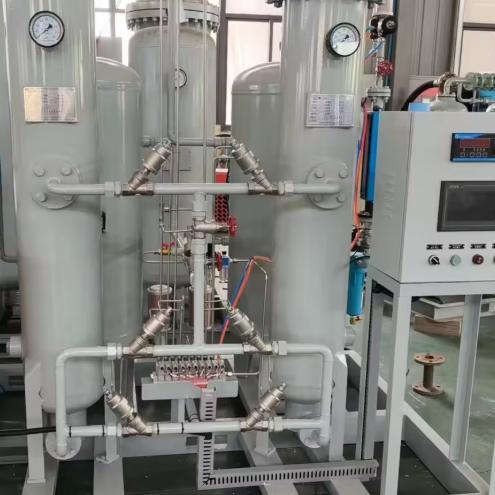
| Capaicty: | 1-50Nm3/h Psa Oxygen Generator |
| Material: | Carbon steel |
| Oxygen Purity: | 90-95% |
| Local Service Location: | None |
| Purity: | 93+/-3% |
| Nitrogen Output: | 130Nm3/hr |
| Motor Power: | 75kw |
| Dimensions: | Varies by model, e.g., 2000x1500x1800 mm |
| Operation: | Fully automatic |
| Dimension: | 245x181x365(mm) |
| Colling Way: | Air-cooling, Water-cooling |
| Company Info. |
| Henan Gnee New Materials Co., Ltd. |
| Verified Supplier |
| View Contact Details |
| Product List |
Gas production m³/h | Oxygen concentration% | Oxygen pressure Mpa | Power 220V Power/kw | Host weight/kg | Dimensions/mm | Air loss factor | Number of bottles per day 40L/120-150kg |
3 | 93±3 | 0.4±0.1 | 0.2 | 600 | 15009001500 | 13.5 | 12-15 |
5 | 93±3 | 0.4±0.1 | 0.2 | 900 | 16009001500 | 13.5 | 20-24 |
10 | 93±3 | 0.4±0.1 | 0.2 | 1200 | 16009001900 | 13.5 | 40-48 |
20 | 93±3 | 0.4±0.1 | 0.2 | 1500 | 190010002180 | 13.5 | 80-96 |
30 | 93±3 | 0.4±0.1 | 0.2 | 2000 | 200011002180 | 13.5 | 120-154 |
40 | 93±3 | 0.4±0.1 | 0.2 | 2500 | 260012002300 | 13.5 | 160-192 |
50 | 93±3 | 0.4±0.1 | 0.5 | 2800 | 180015002400+800 | 13.5 | 200-240 |
60 | 93±3 | 0.4±0.1 | 0.5 | 3200 | 180015002600+800 | 13.5 | 240-184 |
70 | 93±3 | 0.4±0.1 | 0.5 | 3500 | 180016002800+800 | 13.5 | 280-236 |
80 | 93±3 | 0.4±0.1 | 0.5 | 4000 | 180016002900+1000 | 13.5 | 320-394 |
90 | 93±3 | 0.4±0.1 | 0.5 | 4800 | 200016002800+1000 | 13.5 | 360-432 |
100 | 93±3 | 0.4±0.1 | 0.5 | 5800 | 220016002900+1000 | 13.5 | 400-480 |
120 | 93±3 | 0.4±0.1 | 0.5 | 6500 | 240016003100+1000 | 13.5 | 480-576 |


|
 2025 VPSA PSA Oxygen Generator with 150Bar Filling Pressure 42Nm3/hr Output and 0.04-0.06Mpa Outlet Pressure
PSA Oxygen Generator with 8-10 Years Life Span 220V/50Hz Power Supply and 5-45°C Operating Temperature for Industrial Use
15Nm3/h 93% Purity PSA Oxygen Generator Plant with 220V/380V Power Supply for Food Industry
PSA Oxygen Generator Plant Machine 220V Production Line
High Purity 95~99.9995% PSA Oxygen Generator with 150Bar or 200Bar Filling Pressure and ≤12Nm3/hr Oxygen Output
25Nm³/h 99% High-Purity PSA Oxygen Generator for Laboratory Use - Pressure Swing Adsorption Oxygen Plant
Industrial PSA Oxygen Generator for Fish Farming Heavy Duty Oxygen Generator
100Nm³/h 99.5% High-Purity Skid Mounted PSA Oxygen Generator for Hospital Medical Oxygen Generation Plant
50kW Low-Power-Consumption PSA Oxygen Generator for Mine Emergency Rescue with VPSA Oxygen Supply System
20Nm³/h 93% Purity Energy Saving PSA Oxygen Generator for Community Hospitals
2025 VPSA PSA Oxygen Generator with 150Bar Filling Pressure 42Nm3/hr Output and 0.04-0.06Mpa Outlet Pressure
PSA Oxygen Generator with 8-10 Years Life Span 220V/50Hz Power Supply and 5-45°C Operating Temperature for Industrial Use
15Nm3/h 93% Purity PSA Oxygen Generator Plant with 220V/380V Power Supply for Food Industry
PSA Oxygen Generator Plant Machine 220V Production Line
High Purity 95~99.9995% PSA Oxygen Generator with 150Bar or 200Bar Filling Pressure and ≤12Nm3/hr Oxygen Output
25Nm³/h 99% High-Purity PSA Oxygen Generator for Laboratory Use - Pressure Swing Adsorption Oxygen Plant
Industrial PSA Oxygen Generator for Fish Farming Heavy Duty Oxygen Generator
100Nm³/h 99.5% High-Purity Skid Mounted PSA Oxygen Generator for Hospital Medical Oxygen Generation Plant
50kW Low-Power-Consumption PSA Oxygen Generator for Mine Emergency Rescue with VPSA Oxygen Supply System
20Nm³/h 93% Purity Energy Saving PSA Oxygen Generator for Community Hospitals

