| Sign In | Join Free | My insurersguide.com |
|
| Sign In | Join Free | My insurersguide.com |
|
| Categories | Hydraulic Metal Balers |
|---|---|
| Brand Name: | WANSHIDA |
| Model Number: | Y83/T-2000 |
| Certification: | ISO9001,CE |
| Place of Origin: | China |
| MOQ: | 1 set |
| Price: | Negotiable |
| Payment Terms: | L/C,T/T,Western Union |
| Supply Ability: | 30set/month |
| Delivery Time: | 25days |
| Packaging Details: | Sea Worthy |
| Product name: | Hydrualic Mental Baler |
| Model: | Y83/T-2000 |
| Power(KW): | 30/37/44 |
| Operation: | Manual or PLC |
| Nominal Force(KN): | 2000 |
| Chamber size(mm): | 1600*1000*800(Customizable) |
| Bale Section: | 400*400 |
| Usage: | Waste Metal Recycling Yard |
| Company Info. |
| JIANGSU WANSHIDA HYDRAULIC MACHINERY CO., LTD |
| Verified Supplier |
| View Contact Details |
| Product List |
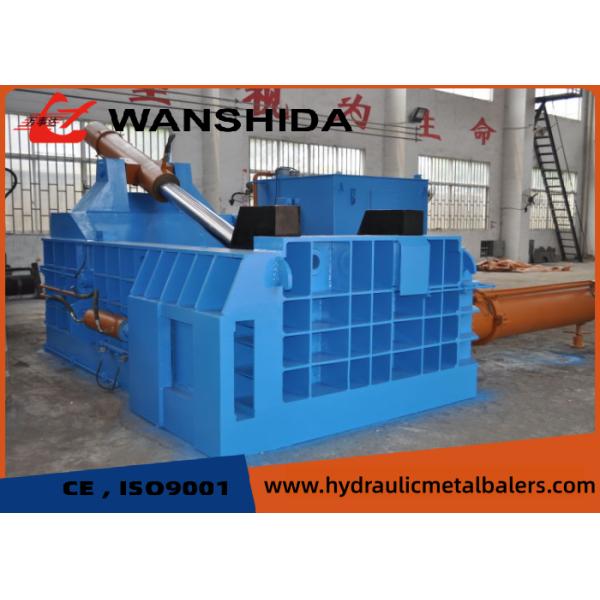
Y83/T-2000 Power 30KW Hydrualic Metal Baler For Metal Recycling and Scrap Yards
Product Overview
The Y83-200 is a high-performance, push-out type scrap metal baling
press designed for efficient processing of light and bulky metal
scrap. With a powerful baling force of 2000 kN (200 tons), it is
engineered to compress a wide range of loose scrap—such as metal
turnings, steel cuttings, and automotive shells—into dense,
rectangular bales. This process significantly reduces the volume of
scrap by up to 5:1 or more, optimizing storage space, slashing
transportation costs, and preparing material for smelting and
recycling. Available with either Manual or fully automatic PLC
control systems, the Y83-200 is an ideal solution for achieving
waste reduction and resource recovery in industrial settings.

| Model | Baling Force (kN) | Chamber Size (mm) | Bale Size (mm) | Motor Power | Operation Method |
|---|---|---|---|---|---|
| Y83/T-2000 | 2000 | 1600 × 1000 × 800 | 400 × 400 | 30/37/44kW | Manual or PLC Control |
Q1: What types of scrap metal can this press handle?
A1: This press is ideal for low-density, bulky scrap such as steel
chips, copper turnings, aluminum swarf, sheet metal cuttings, used
automotive bodies, paint cans, and beverage cans. It is not
recommended for processing thick solid steel blocks or cast iron; a
larger shear-type baler would be more suitable for such materials.
Q2: What is the difference between Manual and PLC control?
A2: Manual control requires an operator to manage each step of the
baling cycle individually, which is useful for debugging or
specific situations. PLC automatic control allows for a
single-button start to complete the entire "Compress -> Hold
-> Eject -> Return" cycle automatically, offering higher
efficiency and simpler operation for continuous production.
Q3: What is the approximate weight of a finished bale?
A3: The bale weight depends on the material type and compression
density. For example, a bale of steel scrap typically weighs
between 40-70 kg.
Q4: Does the machine require a special foundation?
A4: Yes. Due to significant vibrations during operation, the press
must be installed on a solid concrete foundation and anchored with
bolts to ensure stable and safe performance.
|
 Y83/T Series Hydraulic Metal Baler 63-125 Tons For Steel Production Plants
Y83/F Hydraulic Metal Balers Manual Operation for Scrap Metal Recycling at Competitive Prices
125 Ton Turn Out Scrap Metal Baler With 18.5kW Power For Ferrous & Non-Ferrous Recycling
Industrial Recycling Metal Press 63ton With PLC Control For Steel Plant
Industry Hydraulic Copper Press Machine For Light Scrap Metals With CE Certificate
Low Maintain Cost Scrap Baler Compactor 125Ton For Ferrous Metal Refining Industry
Turnover Baling Press Innovative Processing Equipment 1600-6000KN for Metal Recycling with Hydraulic Metal Balers
22 KW Hydraulic Steel Press Balers With PLC Semi-automatic Control For Metal Recycling
160 Ton Manual Turn Out Scrap Metal Baler – 350×350mm Bale Section for Recycling Centers
Heavy Duty Y83-160 Automatic Hydraulic Metal Baler Machine
Y83/T Series Hydraulic Metal Baler 63-125 Tons For Steel Production Plants
Y83/F Hydraulic Metal Balers Manual Operation for Scrap Metal Recycling at Competitive Prices
125 Ton Turn Out Scrap Metal Baler With 18.5kW Power For Ferrous & Non-Ferrous Recycling
Industrial Recycling Metal Press 63ton With PLC Control For Steel Plant
Industry Hydraulic Copper Press Machine For Light Scrap Metals With CE Certificate
Low Maintain Cost Scrap Baler Compactor 125Ton For Ferrous Metal Refining Industry
Turnover Baling Press Innovative Processing Equipment 1600-6000KN for Metal Recycling with Hydraulic Metal Balers
22 KW Hydraulic Steel Press Balers With PLC Semi-automatic Control For Metal Recycling
160 Ton Manual Turn Out Scrap Metal Baler – 350×350mm Bale Section for Recycling Centers
Heavy Duty Y83-160 Automatic Hydraulic Metal Baler Machine

