| Sign In | Join Free | My insurersguide.com |
|
| Sign In | Join Free | My insurersguide.com |
|
| Categories | Alginate Oligosaccharide |
|---|---|
| Brand Name: | NUGLY |
| Model Number: | LB/166R |
| Certification: | ISO9001/ISO22000/FSSC22000/FDA/GRAS |
| Place of Origin: | CHINA |
| MOQ: | 20kg |
| Price: | FOB Shanghai 49.8USD/kg |
| Payment Terms: | T/T |
| Supply Ability: | 20tons/Month |
| Delivery Time: | 5-8 working days |
| Packaging Details: | 1kg/10kg/20kg/Aluminum foil bag |
| Product: | Food Grade Seaweed Oligosaccharides Regulating Intestinal Health |
| Function: | Improve Flavor |
| Purity: | >95% |
| Water Solubility: | 100% Water Soluble |
| Colour: | White |
| Grade: | Food Grade |
| Form: | Powder |
| PH: | 6-8 |
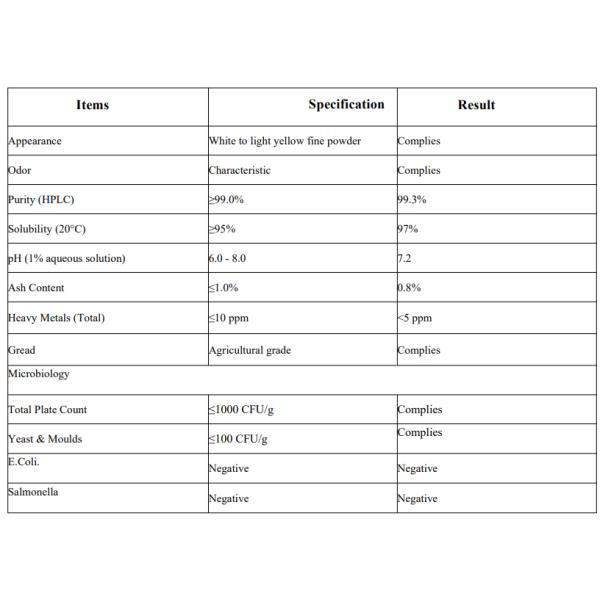
| Ash Content: | ≤1% |
| Heavy Metals (Total): | ≤10 ppm |
| Total Plate Count: | ≤1000 CFU/g |
| Yeast & Moulds: | ≤100 CFU/g |
| E.Coli.: | Negative |
| Salmonella: | Negative |
Food Grade Seaweed Oligosaccharides Regulating Intestinal Health
【NUGLY LB/166R Product Introductions】
Seawwed oligosaccharides are oligosaccharides obtained from the enzymatic, acid, or oxidative degradation of alginate. They are composed of D-mannuronic acid and L-guluronic acid linked by glycosidic bonds, and typically have a molecular weight below 2000 Da. Due to its natural origin, high safety, and various biological activities, it is widely used in the food industry.
【Probiotic function: regulating the balance of gut microbiota】
Brown algae oligosaccharides cannot be directly broken down by
human digestive enzymes, but can be selectively utilized by
beneficial bacteria in the intestine (such as bifidobacteria and
lactobacilli) to promote their proliferation, while inhibiting the
growth of harmful bacteria such as Escherichia coli and improving
the intestinal microbiota environment.
Mechanism of action: By providing beneficial bacterial metabolic
substrates, reducing intestinal pH, inhibiting pathogen adhesion,
and enhancing intestinal barrier function.
Application scenarios: dairy products (yogurt, probiotic drinks),
functional drinks, meal replacement foods, etc., especially
functional foods suitable for intestinal health needs
【Suggest adding quantity】
Adding 0.5% to 0.1% -1.0% yogurt can significantly increase the number of bifidobacteria without affecting the sour and sweet taste; Add ≤ 0.3% to milk to avoid layering.
【NUGLY LB/166R Material Information】
【NUGLY LB/166R Product Application】
1. Probiotic function: regulating the balance of gut microbiota
Seaweed Oligosaccharides cannot be directly broken down by human
digestive enzymes, but can be selectively utilized by beneficial
bacteria in the intestine (such as bifidobacteria and lactobacilli)
to promote their proliferation, while inhibiting the growth of
harmful bacteria such as Escherichia coli and improving the
intestinal microbiota environment.
Mechanism of action: By providing beneficial bacterial metabolic
substrates, reducing intestinal pH, inhibiting pathogen adhesion,
and enhancing intestinal barrier function.
Application scenarios: dairy products (yogurt, probiotic drinks),
functional drinks, meal replacement foods, etc., especially
functional foods suitable for intestinal health needs.
2. Antioxidant function: Delaying oxidation and extending shelf
life
Seaweed Oligosaccharides contain a large number of active groups
such as hydroxyl and carboxyl groups, which can scavenge free
radicals (such as hydroxyl radicals · OH, superoxide anions O ₂⁻
·), inhibit lipid oxidation and protein denaturation, thereby
delaying food oxidation and spoilage.
Mechanism of action: By providing electrons or protons, the free
radical chain reaction is terminated, reducing oxidative stress
damage.
Application scenario: oil food (nuts, fried food), meat products
(sausages, Rice-meat dumplings), fruit and vegetable juice, etc.
can reduce the use of preservatives and improve the natural
fresh-keeping ability of food.
3. Enhance immune activity: improve the body's resistance
Seaweed Oligosaccharides can enhance the non-specific immune
function of the body by regulating the activity of immune cells
such as macrophages and T lymphocytes, promoting the secretion of
cytokines such as interleukin and tumor necrosis factor.
Mechanism of action: It binds to surface receptors of immune cells,
activates signaling pathways, and promotes the expression of immune
factors.
Application scenarios: Infant formula food, elderly nutrition food,
sports nutrition food, etc., used as functional ingredients to
enhance immune function.
4. Improving food texture: optimizing taste and stability
Seaweed Oligosaccharides have certain viscosity and water holding
capacity, and can be used as thickeners, stabilizers, or texture
improvers to improve the taste, water holding capacity, and
stability of food.
Mechanism of action: Through intermolecular hydrogen bonding, it
binds with water, proteins, or starch in food, enhancing the
viscosity and water holding capacity of the system.
Application scenario: Improving water holding capacity and softness
in baked goods (bread, cake); Jelly and pudding can enhance the
strength of gel; Preventing whey precipitation in dairy products.
5. Low calorie and dietary fiber supplementation: adapted to meet
the needs of a healthy diet
Seaweed Oligosaccharides have low calorie content (about 1-2
kcal/g) and belong to water-soluble dietary fiber. They can
increase food satiety, reduce calorie intake, promote intestinal
peristalsis, and prevent constipation.
Application scenarios: Low fat food, weight loss meal replacement
food, high fiber biscuits, etc., to meet consumers' health needs of
"low calorie, high fiber".
Food Grade Seaweed Oligosaccharides


|

