| Sign In | Join Free | My insurersguide.com |
|
| Sign In | Join Free | My insurersguide.com |
|
| Categories | Ultrasonic Indium Coating |
|---|---|
| Brand Name: | FUNSONIC |
| Model Number: | FSY-2010-OC |
| Certification: | CE |
| Place of Origin: | CHINA |
| MOQ: | 1 UNIT |
| Price: | Negotation |
| Payment Terms: | T/T,Western Union |
| Supply Ability: | 1000 unit per month |
| Packaging Details: | Packed by carton |
| Production Name: | 20Khz Ultrasonic External Indium Coating |
| Frquency: | 20Khz |
| Max Power: | 300-1500W |
| Temperature Range: | 150-400℃ |
| Working Amplitude: | 3-20μm |
| Input Voltage: | 220V± 10%,50/60Hz,4A |
| Indium Coated Head Material: | Titanium Alloy |
| Application Direction Flat, inner hole, outer circle, etc: | Flat, inner hole, outer circle, etc |
| Company Info. |
| Hangzhou Qianrong Automation Equipment Co.,Ltd |
| Verified Supplier |
| View Contact Details |
| Product List |
Description:
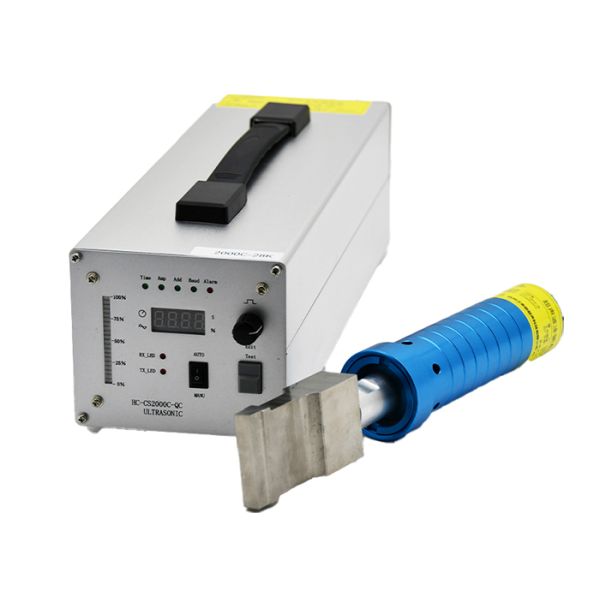
28K Ultrasonic Indium Coating Welding Technology, also known as ultrasonic target welding, Environmentally Friendly Welding Solution 28K Ultrasonic Indium Coating Welding Technology is a new target binding method. Its advantages have gradually been reflected in new semiconductor alloys, solar cells, fiber optic communication, atomic energy, aerospace technology, computers, televisions, and anti-corrosion fields. The most common method for ultrasonic target welding is indium coating, which provides an environmentally friendly welding solution without the use of flux, fundamentally avoiding various problems of conventional flux welding technology, and thus providing stable and reliable welding.
Parameters:
| Model | FSY-2808-PL |
| Name | 28Khz Ultrasonic Flat Indium Coating |
| Frequency | 28Khz |
| Power | 800w |
| Temperature Range | 150-400℃ |
| Working Amplitude | 3-20μm |
| Input Voltage | 220V±10%,50/60Hz, 4A |
| Vibrating Head Size | 50*10mm or Customized |
| Control Mode | Support I/O or 485 communication control, can be integrated with automation operations |
| Product Type | Flat Indium Coating | Inner Indium Coating | External Indium Coating | |
| Power | 100-1000W | 500-2500W | 300-1500W | |
| Frequency | 20,28,30KHz | 20KHz | 20KHZ | |
| Temperature Range | 150-400℃ | |||
| Working Amplitude | 3-20μm | 3-15μm | 3-20μm | |
| Input Voltage | 220V± 10%,50/60Hz,4A | 220V± 10%,50/60Hz,8A | 220V± 10%,50/60Hz,6A | |
| Material of Horn | Titanium Alloy | |||
| Working Mode | Intermittent/ continuous working | |||
| Control Mode | Manual button or external control | |||
| Components | Ultrasonic generator, transducer, specialized amplitude lever, indium coated head, shell, etc | |||
| Ultrasonic Generator | Size | 180*120*360mm | ||
| Weight | 5kg | |||
| characteristic | Fully digital frequency tracking system, temperature automatic adjustment system, capable of working 24 hours a day | |||
| Size of Horn | Φ16T-hat Circular Horn,,50*10mm Square Horn | 50*30mm(Radian fitting tube inner diameter) | 80*20mm(Radian fitting tube external diameter) | |
| Treatment Materials | ITO glass, aluminum, molybdenum, copper, indium, etc | |||
| Application | Flat, inner hole, outer circle, etc | |||
Future Development :
1. Process optimization and automation: With the advancement of
technology, the ultrasonic indium coating process is developing
towards a more intelligent and automated direction. By optimizing
ultrasonic parameters and coating processes, production efficiency
and coating quality can be further improved.
2. Application of new materials: In addition to the conventional
indium layer, researchers are exploring the use of other metal or
alloy materials, such as copper, nickel, etc., in the ultrasonic
coating process to achieve better functional performance.
3. Fine coating at micro and nano scales: By finely controlling
ultrasonic vibration parameters, ultrafine coating deposition at
the micrometer or even nanometer level can be achieved, which is
used in fields such as electronic devices and MEMS.
4. Coating of complex components: For complex shaped components,
researchers are developing multi-point ultrasonic vibration heads
to achieve uniform coating on complex surfaces.
5. Online monitoring and feedback control: Combined with advanced
sensing technology, real-time monitoring and feedback control of
the coating process can be achieved, further improving the
stability of coating quality.
Overall, ultrasonic indium coating technology is developing towards
greater intelligence, refinement, and flexibility, and will have
wider applications in fields such as electronics, automobiles, and
aviation in the future. Of course, further technological innovation
and process optimization are still needed to achieve greater
breakthroughs


|
 High Frequency 20Khz Ultrasonic Copper Plate Indium Coating Vibration Technology
ITO Glass Replacing Manual Cylindrical Indium Coating 20Khz Ultrasonic Technology
Environmentally 20Khz Ultrasonic Indium Coating Inner Target Cylinder Pipe
20Khz Bending Ultrasonic Inner Circle Indium Coating Machine for Petroleum and Chemical Industries
Arc Target Ultrasonic Indium Plating Coating Inner Tube 20Khz 1500w
20Khz New Scraping Technology By Ultrasonic Indium Coating Equipment
Metal And Non Metal Surface Indium Coating Machine 20Khz Target Welding Machine
ITO Glass Aluminum Molybdenum Copper And Ultrasonic Indium Coating Machine Outer Circle
20Khz 2000w Ultrasonic Inner Circle Indium Coating Machine Welding Aluminum Nickel Metal Products
20Khz 1000W Ultrasonic Flat Indium Coating Device Target Welding Machine For Metal Surface Coated
High Frequency 20Khz Ultrasonic Copper Plate Indium Coating Vibration Technology
ITO Glass Replacing Manual Cylindrical Indium Coating 20Khz Ultrasonic Technology
Environmentally 20Khz Ultrasonic Indium Coating Inner Target Cylinder Pipe
20Khz Bending Ultrasonic Inner Circle Indium Coating Machine for Petroleum and Chemical Industries
Arc Target Ultrasonic Indium Plating Coating Inner Tube 20Khz 1500w
20Khz New Scraping Technology By Ultrasonic Indium Coating Equipment
Metal And Non Metal Surface Indium Coating Machine 20Khz Target Welding Machine
ITO Glass Aluminum Molybdenum Copper And Ultrasonic Indium Coating Machine Outer Circle
20Khz 2000w Ultrasonic Inner Circle Indium Coating Machine Welding Aluminum Nickel Metal Products
20Khz 1000W Ultrasonic Flat Indium Coating Device Target Welding Machine For Metal Surface Coated